Nebraska has seen a record number of ballot initiatives circulated this year—a total of twelve so far—which many highlight as the result of a dysfunctional legislature. While many in the “second house” expect the “will of the people” to mandate that the legislature enact passed initiatives accordingly, some state senators are pushing back.
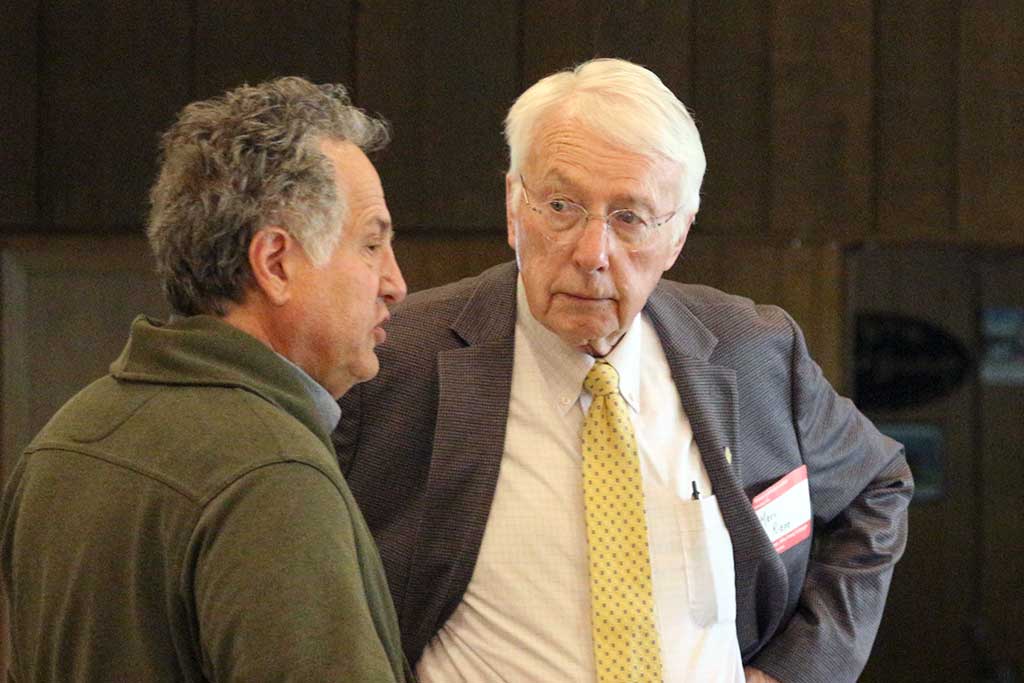
At the Pachyderm Luncheon last week, Merv Riepe (LD-12) said, “If we put a petition down there that said, ‘every citizen in the state of Nebraska would get a check, free and clear, for $20,000,’ everybody would sign that—but there would be nobody to pay for it.”
Former state senator Mike McDonnell, however, doesn’t see the record number of petitions as a sign of dysfunction, but rather a sign that the system is working as designed.
“I think it’s part of the process. I think more people are engaged and want to look at possibly a ballot initiative, which I think is good for our state,” McDonnell said. “If people want to use it more, that’s what it’s there for. And then the people can decide. It’s been there for a number of years, and I just think it’s part of the process.”
Riepe took specific issue with one ballot initiative put forth by Eric Underwood of Advocates for All Nebraskans (AFAN) regarding cutting property taxes.
“One individual—who, if I mentioned his name, you would all know—said he was going to run a petition that would cut property taxes in half. Then, in the Omaha World-Herald, he said, ‘I’ll let the legislature figure out how to pay for it.’ OK, that’s not very mature.”
Brad von Gillern (LD-4) agreed.
“So the one that Senator Riepe just spoke of—I ran the numbers,” von Gillern said. “If that initiative were to pass and the legislature said, ‘Okay, we’ll fix it via sales tax,’ our state sales tax rate would go to 11.5%. Then you add in city and local taxes, plus a lot of restaurant tax. If you go out to eat in Omaha, it would be 14%. And if you’re in an entertainment district, that adds another two to three percent. So if you eat at Blackstone or at a hotel, your sales tax rate could be around 17%.”
I gave Eric Underwood the opportunity to respond below.
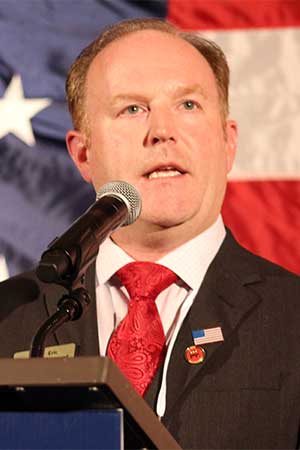
Eric Underwood Responds
Senator Riepe’s comments at the Pachyderm meeting—citing a quote in an Omaha World-Herald article that was never said and implies an ‘anonymous’ individual, shows a level of confusion and inability to confidently articulate any or all facets of the property tax discussions.
It is the height of irony to lecture others on ‘maturity’ while relying on news sources to avoid a direct debate on the merits of property tax relief.
Senators Riepe and von Gillern are effectively attacking the judgment of their own colleagues. Senators Lippincott and Lonowski co-signed LB1182 & LB1183 (our Petitions made into Legislative bills), and Senator DeKay added his support later. These Senators recognize what the critics refuse to admit: a 50% reduction in taxable valuation and a $50,000 teacher base salary via TEEOSA-allocated funds are vetted, structural solutions to a crisis the Legislature has failed to solve.
The Senators can do all the ‘scare-tactic’ math they want, but we don’t have to guess at the impact of these plans. A fiscal note was provided by submitting the petitions as Legislative Bills. The math was verified.
This level of obtuse ignorance to Nebraska’s property tax peril is extremely concerning from people who had campaign promises to that effect. If there is no property tax reform needed in Nebraska, why campaign as if it’s a priority?
The solution to our tax crisis isn’t found in more complex legislative “swaps” or rebalances or credits; it is found in the common-sense principles of conservative capitalism. We must move toward a model where the people—not the government—are the primary stewards of Nebraska’s wealth.
The 50% cut in taxable valuations is $2.6 billion in the hands of the people and it will be the greatest economic stimulus package Nebraska could ever see. It means more capital for business expansion, more local purchasing power, and a direct reduction in the “suffering” caused by the high cost of living.
When state law-makers fully accept that they are losing $175 million of sales tax receipts to property taxes, they’ll very quickly dive into the state statutes to dramatically lower property taxes.
Regardless of who accomplishes the solution, Nebraskans will turn property tax relief into retail sales that will increase sales tax receipts and subsequently income tax as retail hiring reacts.